
10 Job Interview Questions You Should Always Answer Truthfully
How to Write a CV That Gets You Hired in the Gulf
A step-by-step guide to create a professional CV that stands out to employers and recruiters across the Gulf countries.

A job interview is an opportunity for an employer to understand who you are, what you can do, and whether you are suitable for the position. While it is natural to want to make a strong impression, trying to give answers that sound perfect can sometimes create more problems than it solves.
The best approach is to be honest while presenting your experience and abilities in a professional and positive way.
Employers understand that candidates have different levels of experience. They are not necessarily looking for someone who knows everything. They often want people who can communicate clearly, understand their own strengths, recognize areas for improvement, and are willing to learn.
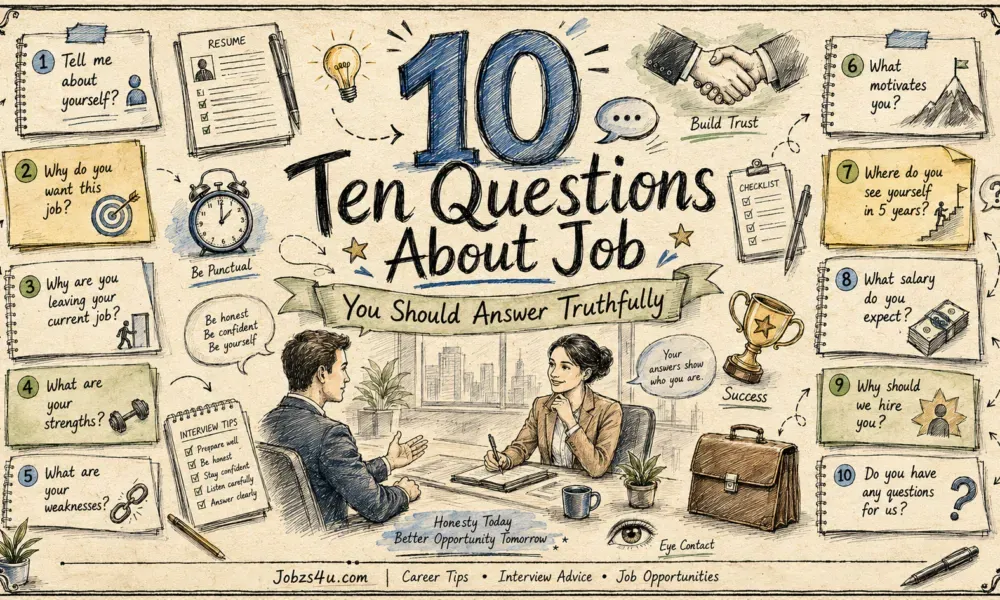
Below are ten common job questions that you should answer truthfully, along with guidance on how to approach them.
1. Why Are You Looking for a New Job?
Interviewers may ask this question because they want to understand your career goals and reasons for changing positions.
Your answer should be honest but professional. If you are looking for better career opportunities, additional responsibilities, a different working environment, or a position related to your skills, explain that clearly.
If you left a previous position because of a difficult situation, avoid turning your answer into a complaint about your former employer.
Instead, focus on what you are looking for next.
For example, you could explain that you are interested in a position where you can develop your skills and take on new responsibilities.
2. What Are Your Greatest Strengths?
This is your chance to discuss abilities that genuinely help you perform your work.
Think about skills that are relevant to the position. These might include communication, organization, teamwork, problem-solving, technical knowledge, customer service, time management, or attention to detail.
Avoid simply listing several impressive-sounding qualities. Give a short explanation or example showing how one of your strengths has helped you complete a task.
For instance, if organization is one of your strengths, you can explain how you manage deadlines or keep multiple responsibilities organized.
Your answer becomes more convincing when it is supported by a real example.
3. What Is One of Your Weaknesses?
Many candidates feel uncomfortable answering this question because they think mentioning a weakness will damage their chances.
However, pretending that you have no weaknesses can sound unrealistic.
Choose a genuine area where you are working to improve. The important part is to explain what you are doing about it.
For example, if you sometimes find it difficult to speak confidently in large groups, you could mention that you are working on your communication skills by participating more actively in presentations or group discussions.
Avoid mentioning a weakness that directly prevents you from performing an essential responsibility of the position.
The goal is to demonstrate self-awareness and a willingness to improve.
4. Why Did You Leave Your Previous Job?
Employers may ask about your previous employment because they want to understand your career history.
Whatever your reason was, provide an honest explanation without making personal attacks against a previous employer, manager, or colleague.
You may have left because you wanted career growth, completed a temporary contract, moved to another location, changed career direction, or were looking for a position more closely related to your skills.
Keep the explanation factual and professional.
If you were dismissed from a position, do not create a false story. Instead, explain the circumstances honestly and, where appropriate, discuss what you learned from the experience.
5. What Relevant Experience Do You Have?
This question allows you to connect your previous experience with the job you are applying for.
Talk about responsibilities, projects, internships, volunteer work, education, or previous positions that are genuinely relevant.
You do not need to describe every task you have ever completed.
Focus on experience that demonstrates your ability to handle responsibilities similar to those mentioned in the job description.
If you are applying for your first job and have limited professional experience, talk about academic projects, training, volunteer activities, or practical skills that show your potential.
Being honest about your experience is much better than exaggerating it.
6. What Are Your Salary Expectations?
Salary questions can sometimes feel difficult, but honesty and preparation are important.
Before an interview, research typical compensation for similar positions in your location and industry when reliable information is available. Consider your experience, qualifications, responsibilities, and the employer’s stated salary range.
If you provide a salary expectation, make sure it is realistic.
You can also ask whether the employer has a salary range established for the position. This can help both sides understand whether their expectations are compatible.
Do not claim that you previously earned a particular amount if that is not true simply to negotiate a higher offer.
7. Are You Willing to Relocate or Travel?
Some positions require employees to travel or move to another location. Employers need to know whether you are genuinely able and willing to meet those requirements.
Answer according to your actual circumstances.
If you can relocate, say so clearly. If you cannot move but are available for occasional travel, explain that distinction.
Do not agree to conditions that you already know you cannot meet just because you want to receive a job offer.
Clear communication at the interview stage can prevent misunderstandings after you are hired.
8. Do You Have the Required Skills or Certifications?
This is one question where accuracy is especially important.
If a job requires a particular qualification, license, certification, software skill, or technical ability, only claim what you genuinely possess.
Employers may verify certifications or test your knowledge during the recruitment process.
If you have basic knowledge rather than advanced expertise, describe your level accurately.
You can also mention your willingness to learn if the position allows candidates to develop the skill after joining the organization.
Being honest about your current abilities can help an employer understand what training you may need.
9. How Do You Handle Pressure and Challenges?
Employers often ask this question because workplaces can involve deadlines, unexpected problems, changing priorities, and difficult situations.
Instead of simply saying, “I work well under pressure,” provide a real example.
Think about a situation from school, work, training, volunteering, or another appropriate experience where you faced a challenge.
Explain what happened, what action you took, and what the outcome was.
For example, you might describe how you managed several deadlines at the same time, helped solve a customer problem, or worked with a team to complete an important project.
A real example makes your answer much more useful than a general statement.
10. Why Should We Hire You?
This question gives you an opportunity to summarize why you are a suitable candidate.
Do not claim that you are better than every other applicant. Instead, focus on the qualities and experience you can genuinely bring to the position.
Mention your relevant skills, work ethic, experience, education, or willingness to learn.
Your answer should connect your strengths with the employer’s needs.
For example, if the position requires organization and communication, explain how your experience has helped you develop those abilities.
The strongest answer is usually specific, confident, and realistic.
How to Be Honest Without Hurting Your Application
Being truthful does not mean giving unnecessarily negative answers.
You can be honest while still presenting yourself professionally.
For example, if you have limited experience with a particular software program, do not claim to be an expert. Instead, you can explain that you have basic experience and are willing to improve your knowledge.
Similarly, if you made a mistake in a previous job, you can acknowledge it and explain what you learned from the situation.
Employers often appreciate candidates who can recognize their limitations and demonstrate a willingness to grow.
Prepare Before the Interview
Honest answers are easier to give when you understand your own background.
Before attending an interview, review your resume and think about examples from your education or experience that demonstrate your skills.
Prepare for common questions, but avoid memorizing complete answers word for word. Interviews are conversations, and your responses should sound natural.
Also research the position so you understand what the employer is looking for.
Final Thoughts
Honesty is one of the most valuable qualities you can bring to a job application and interview.
You do not need to pretend that you have every skill or experience listed in a job description. Instead, clearly explain what you know, what you have accomplished, and where you are still developing.
Truthful answers can help employers make a better decision about whether you are suitable for the role. They can also help you find opportunities that match your actual abilities, expectations, and career goals.
Prepare carefully, communicate confidently, and use real examples whenever possible. A professional candidate does not need to appear perfect—they need to be credible, prepared, and genuine.
Latest Jobzs4u Pro Hiring Now
View All JobsExplore the newest verified jobs across Gulf countries.
| Job Title | Location | Type | Salary | Posted | |
|---|---|---|---|---|---|
| Senior Project Manager | Dubai, UAE | Full Time | AED 18K - 25K | 2 days ago | View Job |
| Senior Project Manager | Dubai, UAE | Full Time | AED 18K - 25K | 2 days ago | View Job |
| Senior Project Manager | Dubai, UAE | Full Time | AED 18K - 25K | 2 days ago | View Job |
| Senior Project Manager | Dubai, UAE | Full Time | AED 18K - 25K | 2 days ago | View Job |
| Senior Project Manager | Dubai, UAE | Full Time | AED 18K - 25K | 2 days ago | View Job |
| Senior Project Manager | Dubai, UAE | Full Time | AED 18K - 25K | 2 days ago | View Job |
1. Start with a Strong Professional Summary
Your summary should be a short 3-4 line statement highlighting your experience, key skills and what you bring to the table.
2. Highlight Your Achievements, Not Just Duties
Employers in the Gulf look for impact. Use numbers and metrics to show your achievements.